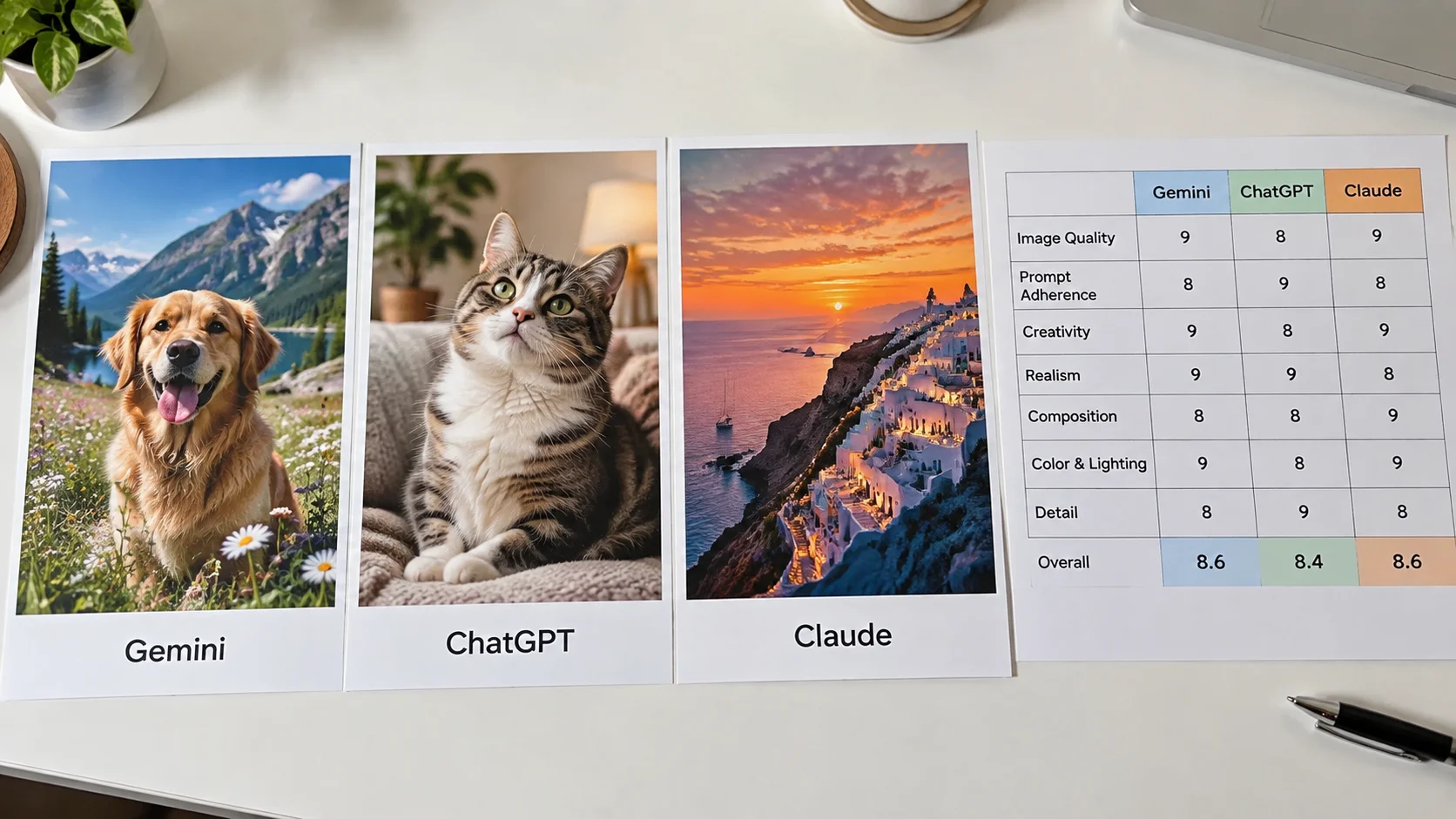
I work at a Bay Area AI startup where Gemini, ChatGPT, and Claude are all in daily rotation. We debate model choice the way other teams debate frameworks. Over the last year I kept running into the same gap: the official docs explain what Gemini can do, and the internet is full of hype about what it might do someday. Almost no one was writing about what actually worked when you tried to ship something useful on a Tuesday afternoon.
That gap is why Gemini Build Lab exists. I test features myself, break them in small ways, then write down the smallest version that still works so you can copy it. The goal is not another model ranking post. The goal is practical engineering notes from someone who has to make the same trade-offs you do.
The Problem I Kept Seeing
Most Gemini content falls into two categories. The first is polished documentation that assumes ideal conditions. The second is social media demos that skip the setup friction, the cost surprises, and the edge cases that appear the moment real data enters the system. Neither one helps a developer who needs a reliable client, a structured JSON response, or a workflow that survives contact with production.
I started keeping private notes after every experiment. What version of the API did I use? How long did the context actually last before quality dropped? Which error messages were useful and which ones just said "something went wrong"? Those notes became the draft material for this site.
The signature phrase on this blog is simple: I tried it first. You can just copy. That is the standard I hold myself to. If I have not run the code from a clean project, I do not publish the tutorial.

What You Will Find Here
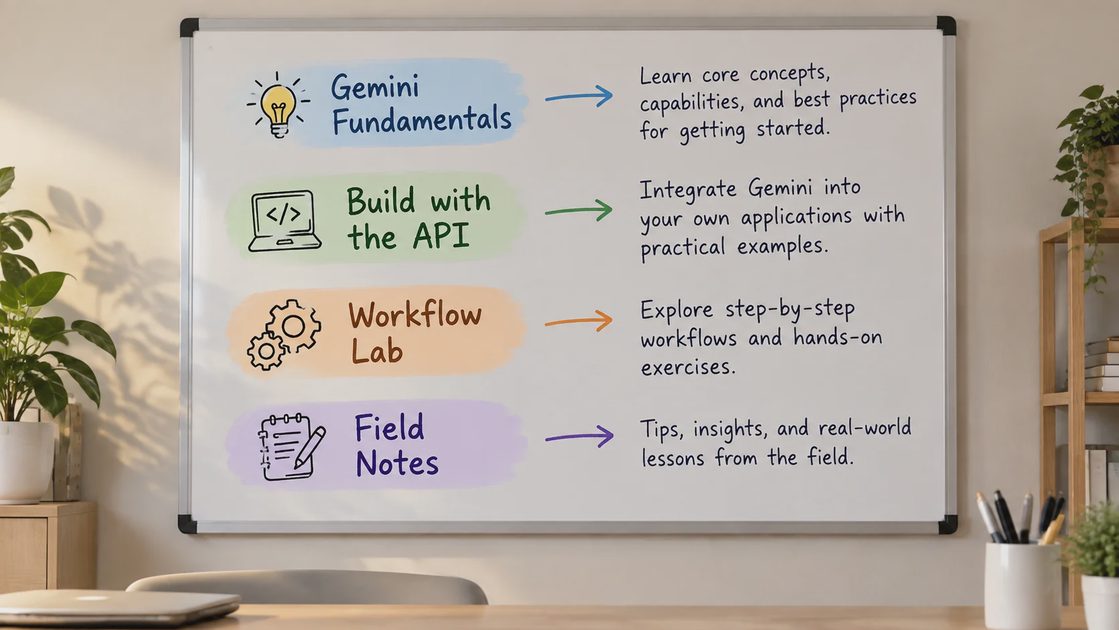
The site is organized around four practical categories.
Gemini Fundamentals covers the concepts that marketing language tends to blur: model differences, context windows, multimodal behavior, grounding, and tool use. These posts start with a plain-English explanation, then move into the technical details that matter when you are choosing a model or designing a prompt.
Build with the API is the tutorial series. Expect complete Python examples, environment variable patterns, structured output with validation, function calling, and small production-minded clients. Every tutorial ends with a short section on what worked, what failed, and what I would change before shipping.
Workflow Lab focuses on everyday startup and product work: summarizing meeting notes, turning customer interviews into themes, weekly growth reporting, and similar tasks that benefit from Gemini without requiring a full application rewrite.
Field Notes is the place for honest testing reports, cost observations, and the stories where a feature looked great in a demo and then failed under real conditions. These posts are deliberately unpolished. They exist to save you the same debugging time.
How I Decide What to Publish
Three filters decide whether a topic becomes a post.
I must have used the feature myself in a realistic setting.
The example must be reproducible from a clean project with documented model versions and approximate costs.
The post must teach a transferable principle, not just a one-off trick.
If a topic fails any of those filters, it stays in my private notes until the conditions change.
Who This Site Is For
The primary reader is a developer, technical product person, data scientist, or automation builder who already knows how to write code and wants Gemini to do useful work beyond chat. Secondary readers include startup teams evaluating Gemini and Vertex AI as alternatives or complements to other model providers.
I assume you are comfortable with Python, environment variables, and basic API clients. I do not assume you have deep experience with large language model production systems. The tutorials start small and only add complexity when it is required for reliability.
You will not find income claims, secret prompt lists, or tribal model wars here. You will find working examples, documented limitations, and the occasional admission that a workflow I was excited about did not survive contact with real data.
What Comes Next
The first twenty posts follow a deliberate sequence. Early articles establish the fundamentals and the basic API patterns. Later articles move into structured output, function calling, retrieval-augmented patterns, and realistic workflows. Field notes appear throughout so that the failures and cost observations stay visible alongside the successes.
If you are just getting started, begin with the fundamentals series and the first Python API tutorial. If you already have a Gemini project running, the structured JSON and function-calling posts may be more immediately useful. Either way, every major tutorial ends with the same three headings: What worked / What failed / What I would change in production.
That structure is intentional. The demo is easy. The edge cases are the real tutorial. I tried it first. You can just copy.